
digital as-built · data centre handover · civil engineering · underground services · data centre operations
Digital As-Built Handover: What Data Centre Operators Should Demand From Their Contractor
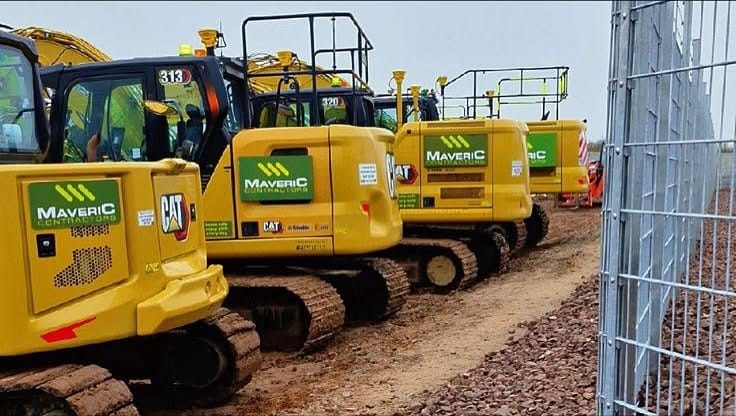
A data centre is handed over once, but it is operated, maintained and expanded for years afterward. Every one of those years depends on knowing, accurately, what is actually beneath the ground and behind the finishes, not what the original design drawings said should be there. That knowledge lives or dies in the as-built record, and the difference between a genuine digital as-built and a folder of marked-up PDFs can determine how quickly a fault is found, how safely a future excavation is planned, or how confidently an operator can expand the facility later. This article sets out what a digital as-built handover should actually include, why it matters more on a data centre than on most other buildings, and what operators should demand from their civils contractor before work even starts, not just at the end of the programme. It draws on how Maveric Contractors captures and hands over as-built records across data centre, substation and grid, and BESS civils works.
1. Why the As-Built Record Matters More on a Data Centre
Data centres carry an unusually high density of buried and concealed civil infrastructure relative to their footprint: duct banks, HV and LV cabling, drainage, foundations for generators and switchgear, and often cooling or fuel lines. Much of this is invisible again within days of being covered over, yet it has to be worked around safely for the lifetime of the facility. Unlike a conventional commercial building, a data centre is also likely to be expanded, retrofitted or have new plant installed close to existing services multiple times over its operating life. An operator making decisions on that later work is only as well informed as the record left by the original civils contractor.
2. What 'Digital As-Built' Actually Means
A digital as-built is a structured, verified record of what was actually constructed, captured and maintained as the work progressed, not reconstructed from memory or marked up on a drawing after the fact. The distinction matters: a record built during construction reflects what the crew on the ground actually found and installed, while a record assembled afterward is often closer to a best guess based on the design intent. A genuine digital as-built typically includes verified positions and depths for underground services and duct banks, records of any deviations from the original design, and a structured format the operator can actually query and use, rather than a static set of PDF drawings that require manual cross-referencing every time a question arises.
3. What Operators Should Demand Before Work Starts
The strength of a digital as-built handover is decided long before the final drawing is issued. It depends on whether the contractor captures data as work happens or tries to reconstruct it afterward, and whether that discipline is built into the contract rather than treated as a nice-to-have at completion.
- Evidence that services are captured and verified as they are installed, not reconstructed from memory at the end of the programme
- A structured, queryable digital format for the handover, not only static PDF drawings
- Verified positions and depths for underground services and duct banks, cross-checked against what was actually installed
- A clear record of any deviations from the original design, and why they occurred Confirmation of who is accountable for the accuracy of the record if a discrepancy is found later
4. Why the Record Is Only as Good as the Team That Built It
An as-built record is a summary of decisions and installations made by many hands over the course of a programme. When detection, excavation, ducting, drainage and foundations are split across several subcontractors, the as-built record has to be assembled afterward from several separate sources, each with its own standard of record-keeping and its own incentive to move on to the next job. Where one contractor self-delivers the underlying civil works, using its own crews and plant rather than a chain of subcontractors, the same team responsible for installing the infrastructure is also responsible for capturing it accurately, which removes one of the most common points of information loss in a handover.
5. How Maveric Delivers Digital As-Built Handover
Maveric captures the services, duct banks and civil infrastructure it installs into its in-house digital backbone as work progresses, so the record handed over at completion reflects what was actually built on site, not just the original design intent. This is possible because Maveric self-delivers its civils and enabling works scope with its own crews and plant, so the same team responsible for the installation is also responsible for the record. That approach is applied consistently across Maveric's data centre, substation and grid, and BESS civils works in Ireland, Germany and Norway, under management systems aligned to ISO 45001 / 14001 / 9001, giving operators a record they can rely on for maintenance, safe excavation planning and future expansion long after the original works are complete.
Frequently asked questions
Q: What is a digital as-built handover?
It is a structured, verified digital record of what was actually constructed on site, including underground services and duct banks, captured as work progresses rather than reconstructed from drawings after completion.
Q: Why does a digital as-built matter more for a data centre than other buildings?
ata centres carry a high density of buried services within a compact footprint and are often expanded or retrofitted multiple times over their operating life, so accurate records of what is beneath the ground directly affect operational safety and future works.
Q: What should operators ask for before construction even begins?
Evidence that the contractor captures data as work happens, a structured digital format rather than only static drawings, and clarity on who is accountable for the accuracy of the record if a discrepancy is found later.
Q: Why does self-delivery affect the quality of the as-built record?
When one contractor self-delivers the underlying works, the same team responsible for installing the infrastructure is also responsible for recording it accurately, rather than the record being assembled afterward from several subcontractors' separate information.
Q: What happens if the as-built record is inaccurate?
An inaccurate record increases the risk of a utility strike or costly rework during future excavation, maintenance or expansion, since decisions end up being based on assumption rather than verified information.