
utility strikes · safe digging · vacuum excavation · underground services
Utility Strikes During Excavation: Causes, Risks and How to Prevent Them
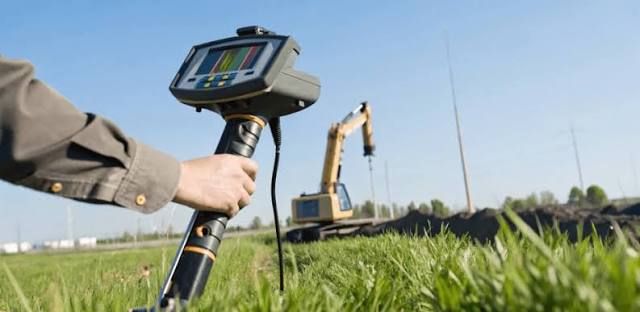
Every utility strike has a story behind it, and almost none of them start with a competent crew deliberately taking a risk. They start with an assumption: that the records were accurate, that the last scan was thorough enough, that the ground had already given up its secrets. On sites with live cables, gas mains, water mains and telecoms ducts running beneath them, that assumption is the real hazard, not the excavator. This article sets out why utility strikes happen, what they put at risk beyond the immediate damage, and how a detect-then-expose approach, pairing detection with vacuum excavation, is built specifically to prevent them. It is written as a contractor's explainer for clients, main contractors and engineers working on data centres, substations and grid, BESS, renewables and semiconductor sites, where buried services are dense and the consequences of getting it wrong are severe.
1. What Counts as a Utility Strike
A utility strike is any unplanned contact between excavation plant, tools or personnel and a buried service, whether that service is an electrical cable, a gas main, a water main, a fibre or telecoms duct, or a district heating pipe. Strikes range from a scrape that exposes a duct without breaching it to a direct hit that severs a cable or ruptures a main. The common thread is that the service was not positively identified before the ground around it was disturbed. Somewhere in the sequence, digging started before detection finished.
2. Why Utility Strikes Happen
Utility strikes are rarely caused by a single failure. They are usually the result of several smaller gaps in the process lining up on the same dig. Utility records are the most common starting point. Drawings and statutory records show where a service was installed, not necessarily where it sits today after repairs, diversions or ground movement. Treating a record as a guarantee rather than a starting point for detection is one of the most consistent root causes of strikes. Detection that stops at the surface is another. A scan that covers the working area but is not carried through to a positive, physical confirmation of depth and alignment leaves a gap between what the equipment suggests and what is actually in the ground. Sequencing pressure on a live programme can also shorten or skip the locate step, particularly when a previous pass through the same area found nothing. And the excavation method itself matters: a mechanical bucket or a hand tool used close to a suspected service carries risk by design, because the tool doing the digging is also the tool that can cause the strike.
- - Reliance on utility records without on-site detection - Detection that is not carried through to positive identification - Sequencing or time pressure that shortens the locate step - Congested ground with multiple services close together - Mechanical or hand-digging methods used near a suspected service
3. The Risks a Utility Strike Creates
The immediate risk of a utility strike depends on what is struck. Contact with a live high-voltage cable is a direct danger to life for anyone near the excavation. A struck gas main creates an explosion and fire risk. A ruptured water main can flood an excavation rapidly, and a severed telecoms or data duct, while a lower risk to life, can take critical infrastructure or public services offline. Beyond the immediate incident, a strike carries programme and cost consequences: the excavation stops, the utility owner has to attend, and repairs and reinstatement take time that the wider programme has to absorb. On mission-critical sites such as data centres and substations, that disruption can affect connected works well beyond the point of the strike itself. There is also a record risk. A near miss or minor strike that goes unreported leaves the as-built picture of the site incomplete, which increases risk for every excavation that follows in the same ground.
4. Detect-Then-Expose: The Approach That Prevents Strikes
Detect-then-expose treats locating and exposing a service as one connected sequence, not two separate jobs done by different teams at different times. Detection happens first and is carried through to a positive result before any ground-breaking tool is used near the marked service. Ground-penetrating radar, including a GPR scanning bucket that reads the ground as the machine works, is used to locate and mark services before excavation starts, rather than relying on records alone. Once a service is marked, vacuum excavation is used to expose it. The ground is loosened with a high-pressure air lance or a water jet, and the spoil is drawn up through a wide hose into a holding tank on a suction excavator truck, so no cutting edge ever enters the ground around the service. The sequence matters as much as the equipment: locate first, loosen the ground around the marked service, extract the spoil by suction, expose the service cleanly, then reinstate. Because the vacuum excavator's boom is operated from grade, no operative needs to stand in the trench next to a live cable or a pressurised main either. Trial holes and slot trenches, small controlled digs used to physically verify what detection has indicated, are a core part of this approach on congested sites, giving positive confirmation of depth and alignment before any bulk excavation begins.
5. How Maveric Applies Detect-Then-Expose on Site
Maveric runs detect-then-expose as a single self-delivered workflow rather than a set of subcontracted, disconnected steps. Detection, using ground-penetrating radar and a GPR scanning bucket, and safe excavation, using vacuum excavation, sit under the same crew and the same plant on site. Every service located is captured in Maveric's in-house digital backbone, so what is found underground during detection is carried through to a verified as-built record at handover, rather than existing only as a mark on the ground during the works. This sits alongside AI proximity detection that stops plant before contact and GPS machine control for accurate setting-out, delivered under management systems aligned to ISO 45001 / 14001 / 9001. The result is a workflow where the locate step is never skipped under programme pressure, because it is built into how the excavation is delivered, not treated as an optional precursor to it.
Frequently asked questions
Q: What is the most common cause of a utility strike?
The most consistent root cause is relying on utility records or an incomplete surface scan instead of carrying detection through to positive, physical confirmation of a service's depth and alignment before digging.
Q: How does vacuum excavation prevent utility strikes?
Vacuum excavation removes soil using suction instead of a mechanical bucket or hand tool, so there is no digging edge in contact with the ground around a marked service, and the operative controls the boom from grade rather than standing in the trench.
What is detect-then-expose?
It is an approach that treats locating and exposing a buried service as one connected sequence: detection using ground-penetrating radar first, followed by safe excavation, such as vacuum excavation, to expose the service without contact.
Q: Are utility strikes only a risk with high-voltage cables?
No. Gas mains carry an explosion and fire risk, water mains can flood an excavation rapidly, and telecoms or data ducts, while a lower risk to life, can take critical services offline and cause significant disruption.
Q: What role do trial holes play in preventing strikes?
Trial holes and slot trenches are small, controlled digs used to physically verify what detection has indicated, giving positive confirmation of a service's position before any bulk excavation begins.