
detect-then-expose · utility strikes, · vacuum excavation · safe digging
Preventing Utility Strikes: The Case for Detect-Then-Expose
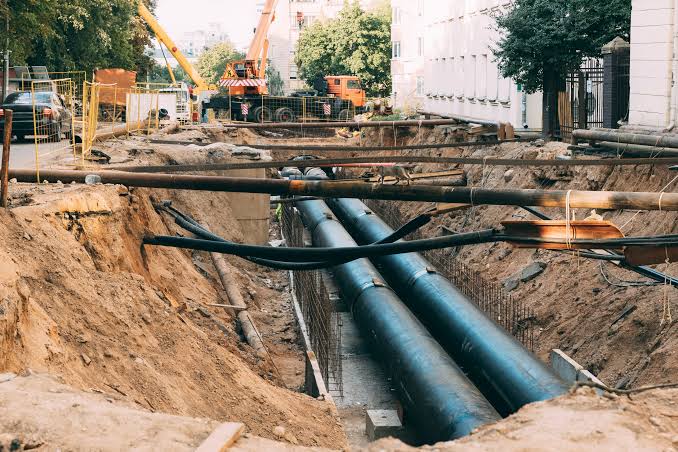
Most utility strikes are not caused by a missing scan. They are caused by a scan and a dig that were never really joined up: one team locates, a different team, on a different day, under different pressure, does the digging. Whatever the locate found has to survive that handoff intact, and on a live programme, it often does not. Detect-then-expose is the case against that handoff. It treats locating a service and exposing it as one continuous method, run by one crew, rather than two separate scopes that happen to sit next to each other on the same site. This article sets out why that distinction is the real reason the method prevents strikes, not just the equipment it uses.
1. The Problem with Treating Detection and Excavation as Separate Jobs
On many sites, locating services and digging near them are procured, scheduled and supervised as two different activities. A specialist locates and marks the ground, a separate excavation team arrives later to dig, and the information has to travel between them through paint marks, a handover sheet, or a drawing that may already be a day or two old. Every handoff in that chain is a place where a positive locate can quietly become an assumption again. Marks fade or get driven over. A different crew reads a drawing without the context of how the locate was actually done. Programme pressure compresses the gap between the two activities until the discipline that made the locate reliable in the first place has gone missing by the time a bucket enters the ground. This is the structural weakness detect-then-expose is designed to remove: not a knowledge gap, but a handoff gap.
2. What Detect-Then-Expose Actually Means
Detect-then-expose is a single workflow, not two adjacent scopes. Ground-penetrating radar, including a GPR scanning bucket that reads the ground as the machine works, locates and marks services first. Once a service is positively identified, vacuum excavation exposes it: the ground is loosened with a high-pressure air lance or a water jet, and the spoil is drawn up through a wide hose into a holding tank on a suction excavator truck, so no cutting edge ever enters the ground around the marked service. Trial holes and slot trenches, small controlled digs used to physically verify what detection has indicated, sit inside the same sequence on congested sites, confirming depth and alignment before any bulk excavation begins. The method's value is not the vacuum excavator on its own. A suction truck used without a locate step ahead of it is still digging blind, just more gently. The case for detect-then-expose rests on the sequence, detection first, carried through to a positive result, then exposure without contact, not on any single piece of plant.
3. Why Self-Delivery Is What Makes the Method Hold Together
The handoff gap described above is usually a contracting gap as much as a technical one. When detection and excavation are subcontracted separately, the discipline that connects them depends on paperwork and goodwill between two companies who do not share a safety record or a line of accountability. Maveric runs detect-then-expose as a self-delivered method: its own crews and its own plant carry out both detection and excavation, under one site management structure. That means the same team that locates a service is accountable for how it is exposed, and the sequence cannot be quietly shortened by a subcontractor working to a different programme or a different margin. This is the same reasoning behind Maveric's wider self-delivery model across its civil and enabling works scope: methods that depend on a disciplined sequence are more reliable when one organisation owns every step of that sequence, rather than when the steps are shipped out to whoever is available.
4. Turning Detection into a Record, Not Just a Memory
A locate that only exists as spray paint on the ground is a temporary safeguard. It protects the current dig and tells the next contractor on that ground almost nothing. Detect-then-expose closes that gap by capturing every service found during detection into Maveric's in-house digital backbone, so what is uncovered becomes part of a verified as-built record at handover rather than fading with the paint marks. That record has value beyond the immediate excavation. On mission-critical sites, particularly data centres, substations and grid, and BESS sites, where the same ground is often revisited across multiple phases of work, an accurate as-built reduces the risk on every excavation that follows, not just the first one. AI proximity detection that stops plant before contact and GPS machine control for accurate setting-out sit alongside the detect-then-expose sequence, delivered under management systems aligned to ISO 45001 / 14001 / 9001.
5. Where the Case Is Strongest
Detect-then-expose earns its place most clearly where the ground is congested, the services are live, or the consequences of a strike are unacceptable. That describes a large share of the buried scope on data centre enabling works, substation and grid civils, and BESS sites, where multiple HV cables, gas mains, water mains and telecoms ducts frequently run close together beneath the working area. It is less about the excavation being difficult and more about what is at stake if a positive locate is skipped: on live, occupied or operational sites, a strike does not just stop the excavation, it can interrupt services the site depends on.
- - Congested ground with multiple services in close proximity - Live or energised services where contact carries a direct safety risk - Occupied or operational sites where a strike disrupts live infrastructure - Programmes with repeated excavation phases in the same ground, where an accurate record protects later works
6. What to Look for When Specifying It
The case for detect-then-expose is only as strong as how it is actually delivered on a given site. When specifying it, the questions worth asking are whether detection and excavation are run by the same crew or handed between separate contractors, whether a locate is carried through to positive confirmation before any digging starts, and whether what is found underground is captured into a verifiable as-built record rather than left as a mark on the ground. Those three questions separate a genuine detect-then-expose method from a suction truck simply hired in alongside a locate that happened on a different day.
Frequently asked questions
Q: What is the difference between detect-then-expose and just hiring a vacuum excavation truck?
A hired-in vacuum excavation truck only changes how the ground is opened. Detect-then-expose is the full sequence, positive detection first, then exposure without contact, run by one accountable team, so the locate cannot be lost or shortened in a handoff between separate contractors.
Q: Why does it matter whether detection and excavation are self-delivered by the same company?
When one organisation owns both steps, the crew that locates a service is also accountable for how it is exposed, which keeps the sequence intact under programme pressure rather than depending on coordination between two separate contractors.
Q: Does detect-then-expose replace utility records?
No. Records remain a useful starting point, but detect-then-expose treats them as a starting point for on-site detection rather than a guarantee of what is actually in the ground.
Q: Is detect-then-expose only relevant for high-voltage cables?
No. The same discipline applies to gas mains, water mains and telecoms or data ducts, since a strike on any of these carries safety, service disruption or programme risk depending on what is struck.
Q: What happens to the information gathered during detection?
It is captured into Maveric's in-house digital backbone and carried through to a verified as-built record at handover, rather than existing only as a mark on the ground during the works.