
duct banks · data centre construction · underground services · civil engineering · enabling works · cable ducting
Inside a Data Centre Duct Bank: Purpose, Design and Construction
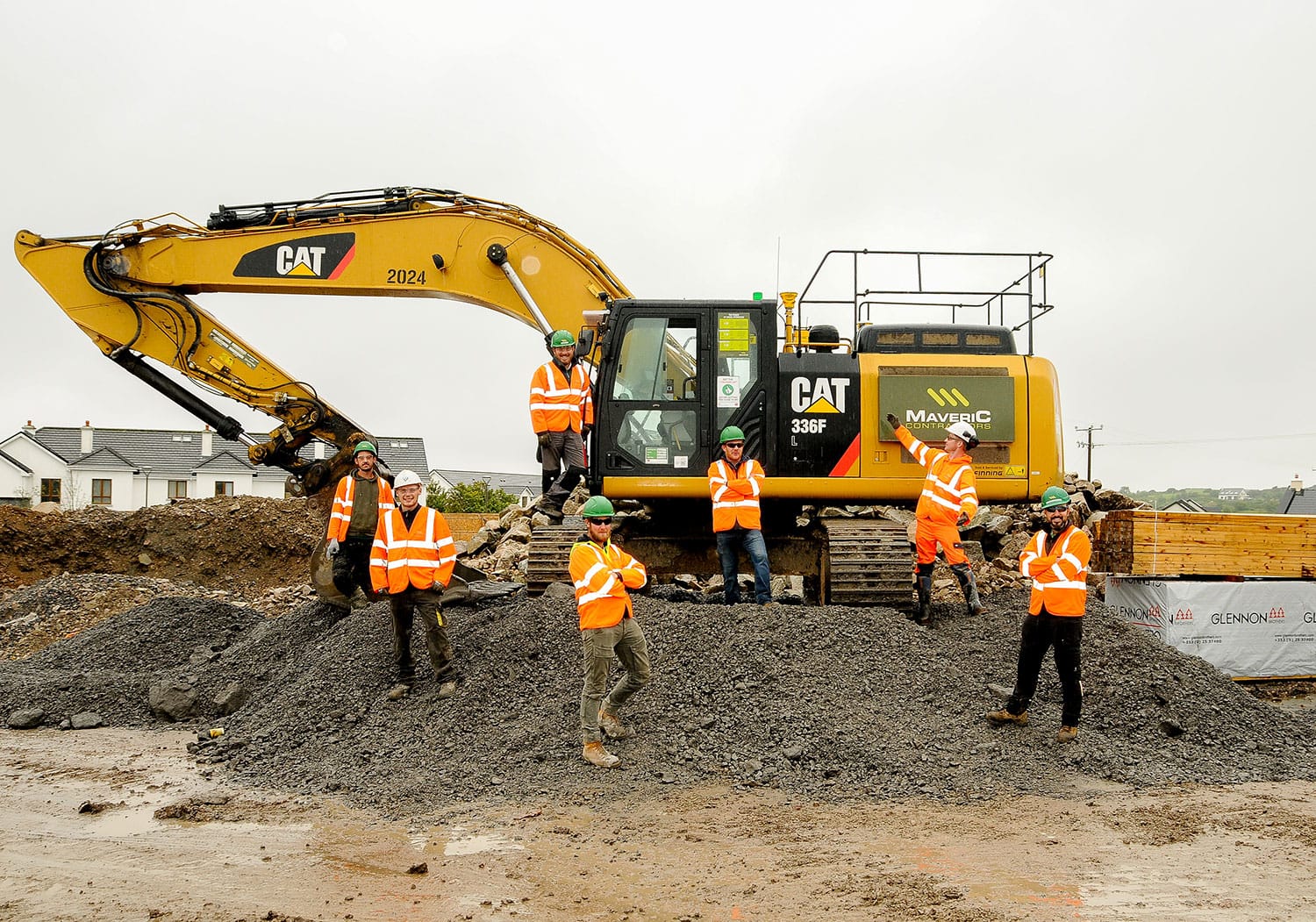
Every data centre depends on a dense network of power and data connections running beneath the site, and almost all of that infrastructure travels through duct banks. They rarely feature in renders or brochures, but the reliability of a facility's power and connectivity depends on how well they are designed and built. This article sets out what a duct bank actually is, why data centres rely on them so heavily, what goes into designing one properly, and how they are constructed on site. It draws on Maveric Contractors' experience self-delivering underground ducting and duct bank installation as part of enabling works across data centre, substation and grid, and BESS sites.
1. What Is a Duct Bank?
A duct bank is a group of conduits, typically arranged in rows and columns and encased in concrete or surrounded by engineered backfill, that provides a protected underground pathway for cables. Rather than burying a cable directly in soil, a duct bank groups multiple conduits into a single structured route, keeping HV and LV power cables, fibre and telecoms cabling, and sometimes cooling or fuel lines organised and separated as they run across the site. Each conduit inside the duct bank acts as a dedicated pathway for a cable or group of cables, so a run can be pulled, replaced or added to later without disturbing the surrounding ground.
2. Why Data Centres Rely on Them
Data centres carry an unusually high density of buried services within a relatively compact footprint: HV feeds to substations and switchgear, LV distribution, fibre connectivity, and often cooling water or fuel lines for on-site generation, all needing protected routes across the same campus. Duct banks give that infrastructure a structured, engineered path rather than a tangle of individually buried cables. They also support the facility's operating life, not just its construction. Spare capacity built into a duct bank allows future cables to be pulled through as the facility expands, without the disruption and risk of re-excavating live ground years after the original works are complete.
3. Designing a Duct Bank
Design starts well before excavation, with decisions on conduit material, typically PVC or HDPE, sized and arranged according to the voltage, cable type and number of runs required, both for current needs and reasonable future expansion. Spacers hold each conduit in its planned position during the concrete pour, maintaining separation between power and communications runs and keeping the layout consistent along the full length of the route. Ground conditions matter as much as the conduit itself. Soil type, groundwater and depth of cover all influence the encasement design and the minimum cover needed to protect the duct bank from surface loading, while manholes or handholes are positioned at regular intervals to allow future cable pulling, splicing and maintenance without having to excavate the run itself.
4. Building a Duct Bank on Site
Construction follows a defined sequence. The trench is excavated to line, level and width, and a prepared bedding layer is placed at the base to provide a stable, even surface for the conduits. Conduits are then laid into the spacer system in their designed arrangement, joints made off, and the assembly checked for line and level before anything is poured. Before the pour, each conduit is typically tested, often with a mandrel pull, to confirm it is clear and undamaged, since a blockage found after the concrete has gone in is far more costly to fix. Concrete encasement, or an engineered backfill where the design specifies it, is then placed around the conduits, followed by compacted backfill up to finished level, with marker tape laid above the duct bank to warn against future excavation contact.
- - Trench excavated to designed line, level and width - Bedding layer placed and compacted at the base - Conduits laid into spacers in the designed arrangement - Each conduit tested, typically by mandrel pull, before encasement - Concrete encasement or engineered backfill placed around conduits - Compacted backfill to finished level with marker tape above
5. Where Duct Banks Fit Within Wider Enabling Works
Duct bank installation rarely stands alone. It has to be sequenced against bulk earthworks, drainage and the concrete foundations and hardstandings going in elsewhere on the campus, so that a duct bank is not built before ground levels are finalised, nor left exposed under later trades. On sites where existing services are already present, safe detection and vacuum excavation are often used to expose them before a new duct bank route is set out around them, avoiding the strikes that come from digging blind near live infrastructure. Getting the sequencing right is as much a programme discipline as it is a technical one, which is why duct bank installation is typically delivered as part of a single, wider enabling works package rather than as an isolated specialist scope.
6. Capturing the As-Built Record
A duct bank is only as useful to a facility's operator as the record of where it actually runs. Every conduit and duct bank Maveric installs is captured into its in-house digital backbone as work progresses, so the as-built record reflects the true position, depth and layout of the infrastructure at handover, not just the original design intent, delivered under management systems aligned to ISO 45001 / 14001 / 9001. That record matters well beyond the construction phase. An accurate as-built means future excavation near the duct bank, whether for maintenance, expansion or an unrelated project on the same campus, can be planned around verified information rather than an assumption.
Frequently asked questions
Q: What is a duct bank used for in a data centre?
A duct bank provides a protected, organised underground pathway for HV and LV power cables, fibre and telecoms cabling, and sometimes cooling or fuel lines, keeping them separated and accessible without repeated excavation.
Q: What materials are duct bank conduits made from?
PVC and HDPE are the most commonly used conduit materials, chosen based on the cable type, voltage and site conditions, and typically encased in concrete or engineered backfill.
Q: Why are duct banks tested before the concrete is poured?
Conduits are typically checked, often with a mandrel pull, to confirm they are clear and undamaged, since a blockage or defect discovered after encasement is far more difficult and costly to correct.
Q: How does a duct bank support future expansion?
Spare conduit capacity built into the original design allows additional cables to be pulled through later as the facility expands, without needing to re-excavate the route.
Q: Why does the as-built record matter for duct banks?
An accurate as-built record means future work near the duct bank can be planned around verified information about its position and depth, reducing the risk of a strike during later excavation.